Description
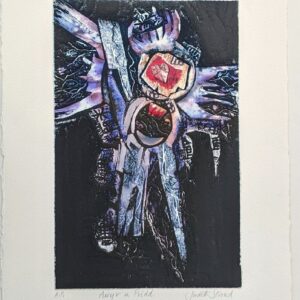
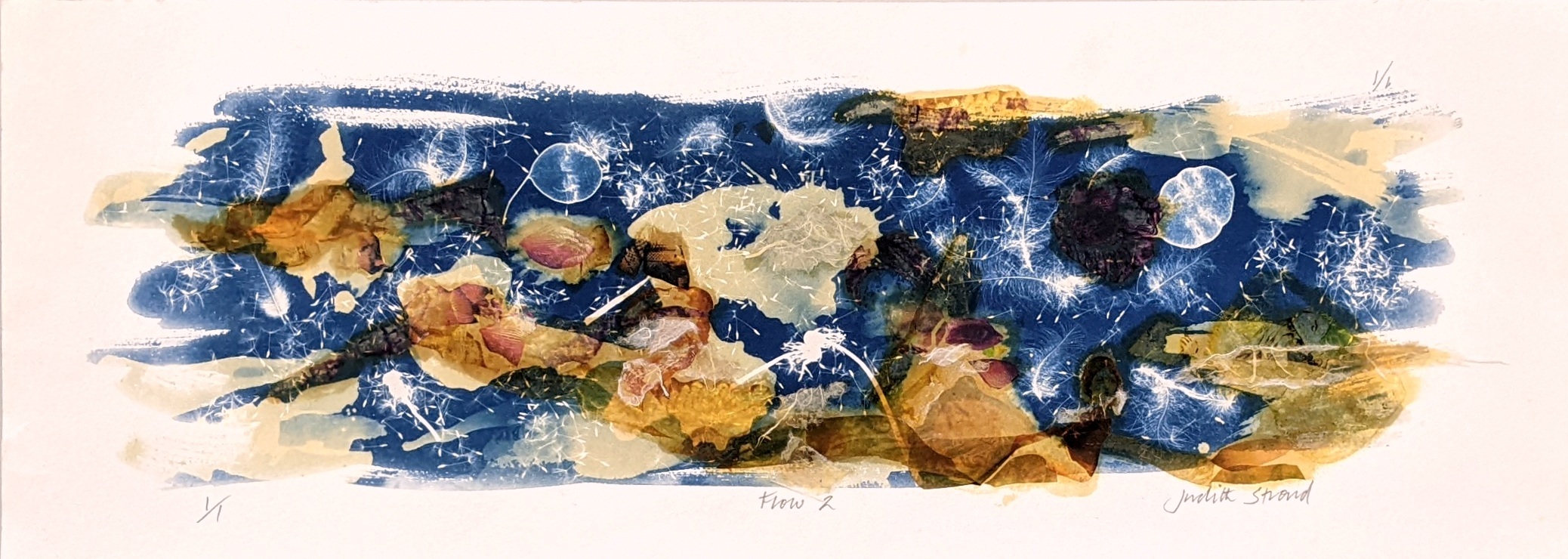
Judith Stroud | Flow 4 | Collagraph | 67 x 22cm | £50
The Flow series of mixed media prints was inspired by the Cyanotype process with its deep blue heavenly and watery backgrounds. Collagraph pieces were printed onto these cyanotype backgrounds to include the impression of.layers of sediment which floated downwards. I was partly inspired by archeological excavations and the discovery of preserved artefacts and remains in peat bogs and river beds
The images evoke ideas of creation, decay, rebirth, renewal and death.
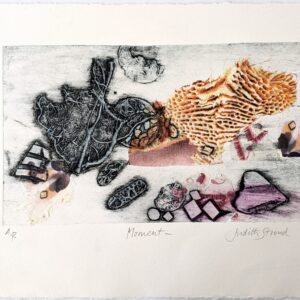
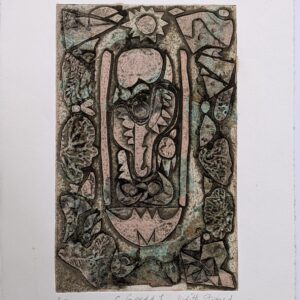
Collagraph is a printmaking technique which operates, as the name suggests, on the basis of collage. The physical activity involved in creating a collagraph plate is the interaction with a selection of materials of varying textures. It is a particularly robust, direct and unfussy type of printmaking and the surfaces created are relatively unpredictable. Indeed, much of the joy of working with collagraph lies in the tremendous scope there is for innovation and experiment.
The nature and breadth of Collagraph as a means of creating uniquely rich and interesting printed imagery makes it one of the most dynamic innovations to take place within printmaking in recent decades. Unlike other intaglio and relief methods, which rely on a set of one or more highly technical processes, Collagraph is a process which enables you to work directly with materials, and to explore the qualities of those materials.
The collagraph plate can be made from ‘liquid’ materials, which are painted on to the plate or applied in a liquid or semi-liquid form, with a brush, palette knife or squeegee, such as PVA glue, ceramic tile cement or epoxy resin or from materials which are cut-out and glued down, for example, tissue paper gauze, scrim and fabric.